
On the morning of April 12, 1981 — exactly twenty years to the day after Yuri Gagarin became the first human in space — Columbia lifted off from Launch Complex 39A at Kennedy Space Center with astronauts John Young and Robert Crippen aboard. It was the first time a crewed spacecraft had launched on its maiden flight without an unmanned test, and the first time a winged vehicle had returned from orbit under pilot control. When Columbia glided to a landing at Edwards Air Force Base two days later, a new era of human spaceflight had begun.
The Space Transportation System — universally called the Space Shuttle — flew 135 missions over 30 years before its retirement in July 2011. It deployed and repaired the Hubble Space Telescope, carried the components of the International Space Station to orbit, hosted 355 individual astronauts from 16 nations, and advanced science in fields from materials processing to fundamental physics. It also claimed the lives of fourteen people in two disasters that reshaped how the world thinks about human spaceflight risk.
Engineering a Reusable Spacecraft
The shuttle's design was a product of compromise between engineering ambition and budget constraint. Congress approved the programme in 1972 after rejecting more expensive fully reusable concepts. The result was a partially reusable system: the winged orbiter and two solid rocket boosters (SRBs) were recovered and reflown, while the large orange external tank that fed the orbiter's three main engines was discarded after each flight.
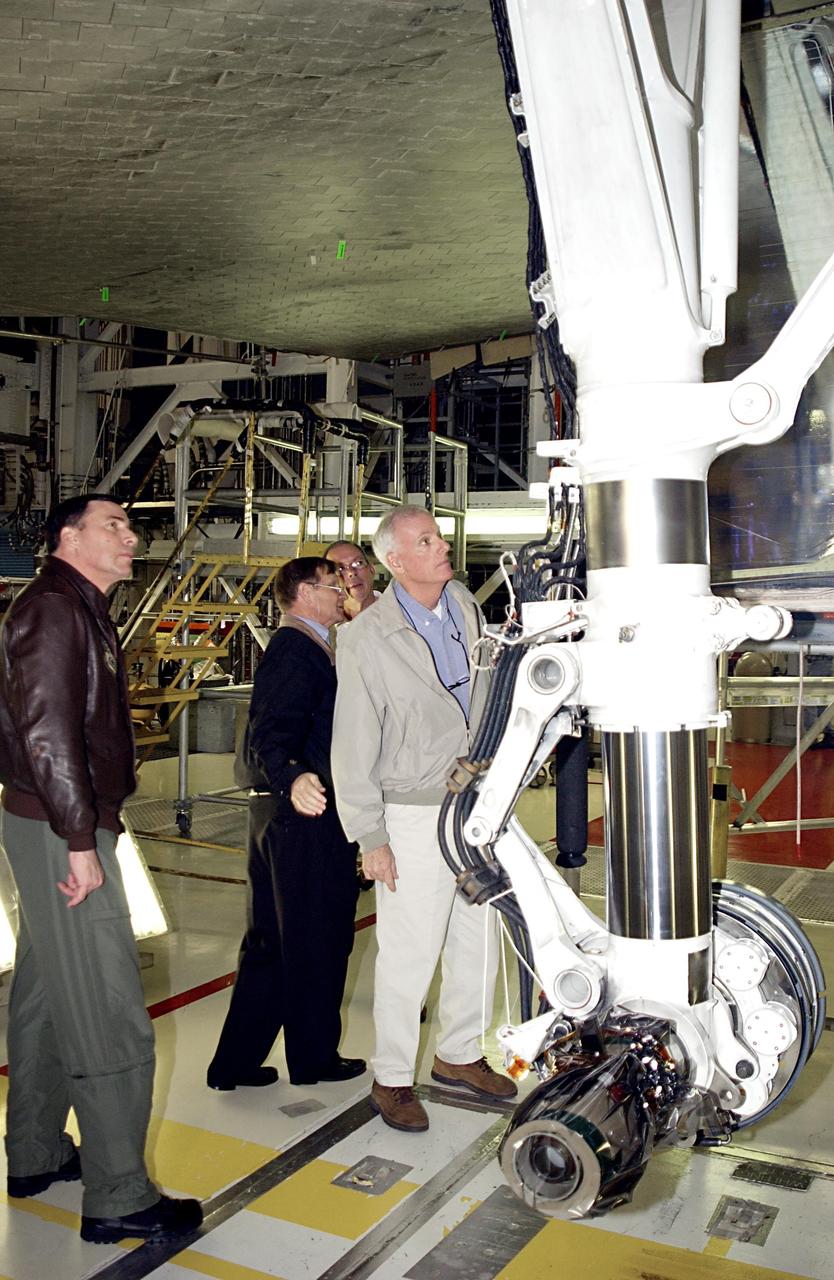
The orbiter itself was an engineering achievement on multiple fronts. Its underside and wing leading edges faced reentry temperatures exceeding 1,650°C — hot enough to melt steel. The solution was a thermal protection system of more than 24,000 individual silica tiles, each one unique in shape, hand-fitted to the vehicle's surface. Each tile could withstand searing heat on one face while remaining cool enough to handle on the other, thanks to the extremely low thermal conductivity of the silica foam.
The three main engines — the RS-25, built by Rocketdyne — were the most technically demanding rocket engines ever flown in an operational programme. They burned liquid hydrogen and liquid oxygen at a chamber pressure exceeding 20 megapascals, achieving a specific impulse of 453 seconds in vacuum. Each engine was rated for 55 missions before major overhaul, a standard of reusability that required unprecedented precision in manufacturing and inspection.
Every shuttle launch was an act of organised audacity — a winged spacecraft balanced atop millions of kilograms of propellant, threading perpetually between triumph and catastrophe.
Enjoying this? Get one article like this every week — free. Subscribe below →
Triumph and Tragedy
The shuttle's mission portfolio was extraordinary. STS-41C in April 1984 made the first in-space capture and repair of a satellite — Solar Maximum Mission — demonstrating that astronauts could work as orbital mechanics. STS-31 in April 1990 deployed the Hubble Space Telescope. When Hubble's flawed primary mirror was discovered, STS-61 in December 1993 sent a crew of seven on five consecutive spacewalks to install corrective optics — a rescue that remains one of the greatest achievements in the history of astronomy. Beginning with STS-88 in December 1998, shuttles assembled the International Space Station piece by piece over 37 assembly flights spanning more than a decade.
Challenger and Columbia
The programme was defined equally by its two tragedies. On January 28, 1986, Challenger broke apart 73 seconds after liftoff on mission STS-51-L. An O-ring seal in the right solid rocket booster had failed to seat properly in the near-freezing overnight temperatures at Cape Canaveral. Hot combustion gases burned through the joint, severing the strut attaching the booster to the external tank and triggering a rapid structural breakup. All seven crew members were killed, including Sharon Christa McAuliffe, a high school teacher from New Hampshire who had been selected as the first civilian to fly aboard the shuttle.
The Rogers Commission investigation that followed found not just an engineering failure but an organisational one: NASA management had been warned by engineers at contractor Morton Thiokol that the O-rings were not certified for cold-weather launches, and proceeded anyway under schedule pressure. The shuttle was grounded for 32 months.
On February 1, 2003, Columbia disintegrated during reentry on mission STS-107. Eighty-two seconds after launch sixteen days earlier, a piece of insulating foam — roughly the size of a briefcase — had broken from the external tank and struck the leading edge of the left wing, punching a hole in the reinforced carbon-carbon thermal protection panels. On reentry, superheated plasma entered the breach and destroyed the wing from within. All seven crew members were killed. The Columbia Accident Investigation Board identified the same organisational culture issues that had contributed to Challenger, and NASA's human spaceflight programme underwent fundamental restructuring.
A Legacy That Endures
The shuttle fleet comprised five flight-ready orbiters, each with its own operational history:
- Columbia (OV-102): first to fly (April 1981); flew 28 missions; lost on STS-107, February 1, 2003
- Challenger (OV-099): flew 10 missions; lost on STS-51-L, January 28, 1986
- Discovery (OV-103): flew 39 missions — the most of any orbiter; now on display at the National Air and Space Museum Udvar-Hazy Center, Virginia
- Atlantis (OV-104): flew 33 missions; crewed the final shuttle flight, STS-135; now on display at Kennedy Space Center Visitor Complex
- Endeavour (OV-105): built as Challenger's replacement; flew 25 missions; now on display at the California Science Center, Los Angeles
A sixth vehicle, Enterprise (OV-101), was constructed for atmospheric approach and landing tests conducted at Edwards Air Force Base in 1977. It never flew in space and is now on display at the Intrepid Sea, Air & Space Museum in New York.
The shuttle's technical legacy reaches into every major human spaceflight programme that followed. The RS-25 main engines were preserved after retirement and now power NASA's Space Launch System on Artemis missions. The modular assembly-in-orbit methodology proven across ISS construction became the template for planning future space stations and deep space architectures. And the shuttle's payload bay — 18.3 metres long and 4.6 metres in diameter — defined a standard for large space hardware that telescope and module designers used for decades. Thirty years after Columbia's first flight, the shuttle's influence on how humanity reaches space remains profound.