
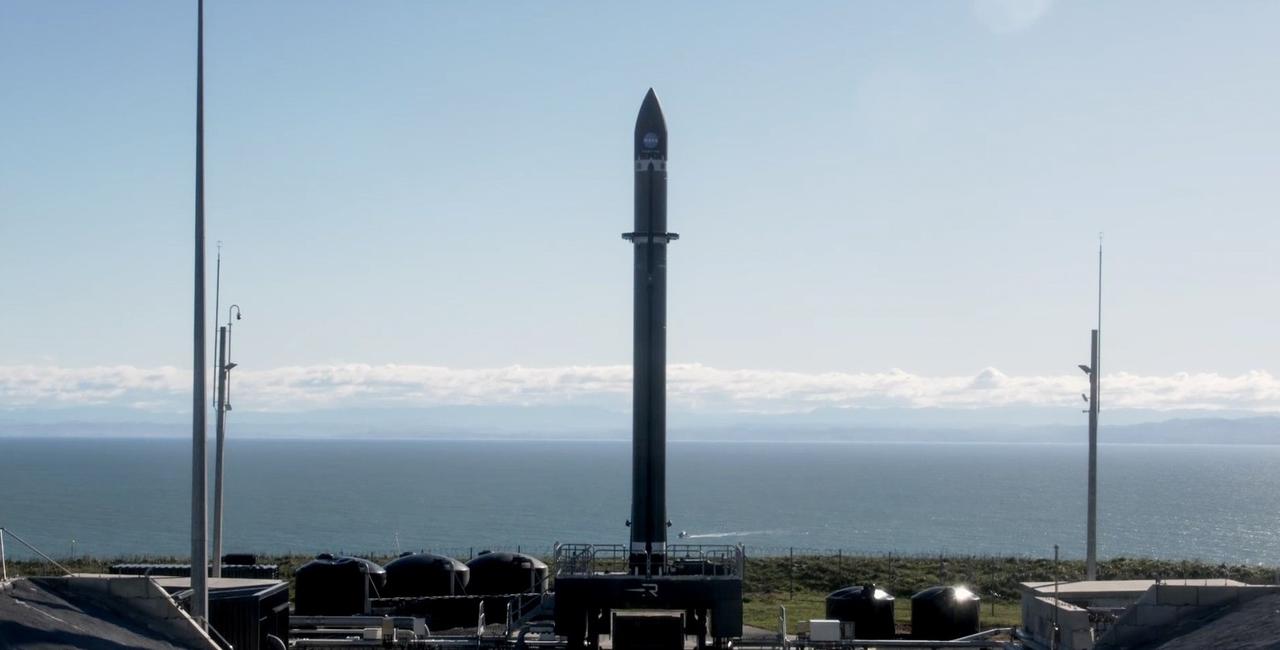
A rocket engine is one of the simplest machines in engineering: burn propellant, expel the exhaust, move the other way. Newton's third law — every action has an equal and opposite reaction — is all you need to understand the core idea. But translating that principle into a vehicle capable of reaching orbit at 28,000 km/h, surviving re-entry, and landing softly on a drone ship involves some of the most demanding engineering humans have ever done.
The fundamental equation governing rocket flight is the Tsiolkovsky rocket equation, derived in 1903 by the Russian schoolteacher Konstantin Tsiolkovsky: Δv = ve · ln(m0/mf). Here, Δv is the change in velocity the rocket can achieve, ve is the exhaust velocity, m0 is the initial (fully fuelled) mass, and mf is the final (empty) mass. The equation reveals an uncomfortable truth: to go faster, you need more propellant, but more propellant means more mass to accelerate, which requires even more propellant. The ratio of fuel to payload grows exponentially with the desired speed.
"The rocket equation is the fundamental constraint of spaceflight. Everything else — staging, propellant choice, lightweight structures — is engineering's answer to it."
Thrust: Where the Force Comes From
Thrust is generated when propellant is accelerated out of a nozzle at high velocity. The thrust force equals the mass flow rate of the exhaust multiplied by the exhaust velocity, plus a pressure term at the nozzle exit. A rocket engine does not push against the atmosphere — it pushes against the exhaust itself. This is why rockets work in the vacuum of space, where there is nothing to push against except the gas they eject.
The efficiency of a rocket engine is measured by its specific impulse (Isp) — the thrust produced per unit of propellant consumed per second, measured in seconds. A higher specific impulse means more speed from the same amount of propellant. Chemical rockets are typically limited by the energy stored in the propellant's molecular bonds. The best chemical propellant combination — liquid hydrogen and liquid oxygen, used by the Space Shuttle Main Engine — achieves an Isp of around 450 seconds in vacuum. Kerosene-oxygen engines (like the Falcon 9's Merlin) reach around 311 seconds at sea level, 348 in vacuum.
The Nozzle: Converting Heat Into Speed
The combustion chamber is where propellants meet and burn, reaching temperatures above 3,000°C and pressures exceeding 200 atmospheres. The de Laval nozzle — a convergent-divergent duct — converts this hot, high-pressure gas into a directed supersonic stream. Gas accelerates as it passes through the narrow throat, reaching the speed of sound there, then continues accelerating in the divergent (expanding) section to supersonic velocities.
The shape of the nozzle is critical. At sea level, the optimal expansion ratio is different from the one in vacuum. An over-expanded nozzle (designed for vacuum but operating at sea level) creates internal shock waves that reduce thrust. An under-expanded nozzle (sea-level optimised, operating in vacuum) loses potential performance. This is why some upper-stage engines have large, bell-shaped nozzles — they are optimised for the vacuum environment where they do most of their work.