Rocket Science · Space Industry
Reusable Rockets: How SpaceX Changed the Economics of Space
S
Editorial Team
September 19, 2025 · 8 min read
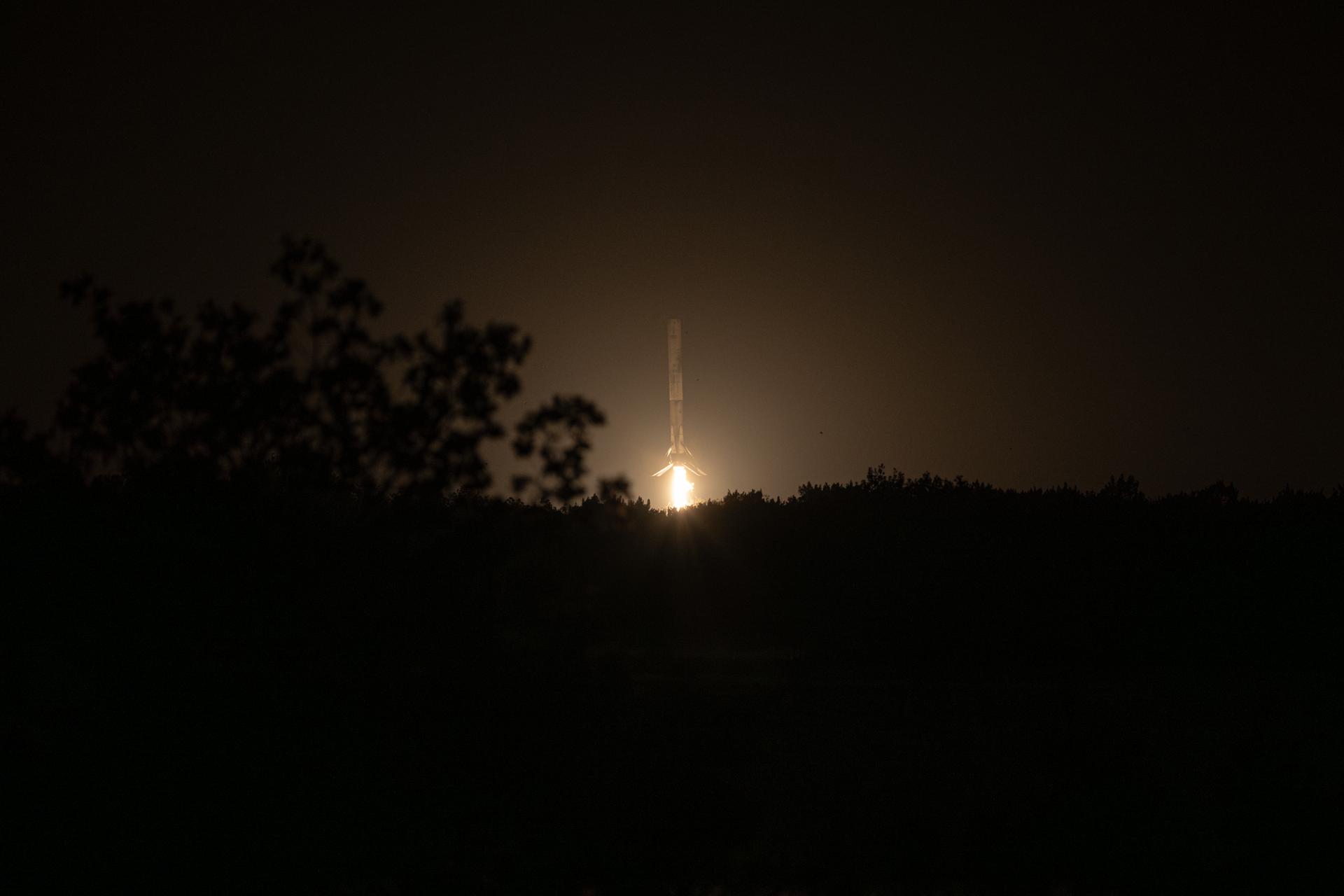
On December 21, 2015, a Falcon 9 first stage climbed to the edge of space, separated from its upper stage, and then did something no orbital rocket booster had ever done: it turned around, re-lit its engines, and landed vertically on four legs at Cape Canaveral. The crowd watching the SpaceX livestream erupted. The moment was not just a technical achievement — it was the reversal of a 60-year assumption that rockets were expendable hardware, used once and discarded in the ocean.
The economics of that assumption were brutal. A Falcon 9 first stage costs roughly $30–40 million to manufacture. The propellant consumed during launch costs around $200,000. If you throw the stage away, you are discarding 60–70% of the rocket's value on every flight. SpaceX's pitch was simple: if you can recover and reuse the stage, the marginal cost of a launch approaches the cost of propellant plus refurbishment. That changes the price structure of the entire industry.
"The goal has always been full and rapid reusability. A fully reusable rocket is the fundamental breakthrough needed to make life multiplanetary. Nothing else comes close in importance."
The Engineering Problem of Landing a Rocket
A Falcon 9 first stage separates from the rest of the rocket travelling at roughly 2 km/s at an altitude of about 70 km. It then needs to perform three engine burns over the next 8–10 minutes to land safely:
- Boostback burn: For return-to-launch-site (RTLS) landings, the booster re-lights 3 of its 9 Merlin engines to reverse its downrange trajectory and fly back toward the launch site. For drone ship landings (used for heavier missions where the booster has less propellant margin), this burn is skipped or reduced.
- Re-entry burn: As the booster re-enters the thickening atmosphere at high speed, 3 engines fire to slow it from ~1.5 km/s and reduce aerodynamic heating and loads on the aluminium structure.
- Landing burn: A single Merlin engine throttles down to its minimum thrust to slow the booster from ~250 m/s to nearly zero, touching down at roughly 2 m/s on four deployable landing legs.
The entire sequence requires precise guidance, navigation, and control. Grid fins — titanium lattice control surfaces — deploy shortly after separation to steer the booster through the atmosphere with remarkable precision. The landing zone on a drone ship is roughly 90 × 52 metres; the booster hits it to within a metre or two.
Enjoying this? Get one article like this every week — free. Subscribe below →
How Many Times Can a Booster Fly?
SpaceX initially certified Falcon 9 boosters for 10 flights with minimal refurbishment between flights. By 2023, individual boosters had surpassed 15 flights, and SpaceX has publicly stated that the airframe should be capable of at least 100 flights with appropriate maintenance. The record as of mid-2025 stands above 20 flights for several boosters in the fleet.
Refurbishment after landing involves inspection of the engines and structure, replacement of any worn components (grid fin actuators, landing leg mechanisms, engine igniter fluid), and a static fire test before the next mission. SpaceX has progressively reduced the turnaround time from months to weeks. The goal — still aspirational — is rapid reusability with aircraft-like turnarounds measured in hours.
Why Previous Attempts Failed
SpaceX was not the first to attempt reusable rockets. The Space Shuttle (1981–2011) was theoretically reusable but required 11,000 workers and months of refurbishment between flights — costs that erased any economic advantage. NASA's DC-X (Delta Clipper) in the early 1990s demonstrated vertical takeoff and landing on a small subscale vehicle but was cancelled before reaching orbital capability. McDonnell Douglas's proposal for the Delta Clipper Experimental Advanced (DC-XA) met a similar fate.
The difference with SpaceX was a combination of factors: a clean-sheet design with reusability as a primary goal from the start, a culture of rapid iteration and tolerance for failure, the development of Merlin engines with deep throttle capability (critical for the landing burn), and significant private capital that allowed risk-taking not available to government-funded programs.
The Competitors: New Shepard, New Glenn, and Starship
SpaceX's success catalysed the industry. Blue Origin, founded by Jeff Bezos, developed the New Shepard suborbital vehicle — a capsule and booster that both land vertically — and conducted the first successful New Shepard booster landing in November 2015, days before SpaceX's orbital Falcon 9 landing. (The distinction matters: suborbital vehicles reach space but not orbital velocities, making recovery fundamentally easier.) Blue Origin's orbital vehicle, New Glenn, flew its first mission in September 19, 2026, successfully landing its first-stage booster on its debut flight.
SpaceX's own next-generation fully reusable system is Starship — a two-stage vehicle consisting of a Super Heavy booster and Starship upper stage, both designed for rapid reuse. Starship uses 33 Raptor engines on the booster, burning liquid methane and liquid oxygen. The booster is caught at the launch tower by mechanical arms rather than landing on legs — the "chopstick" approach reduces landing hardware mass and enables rapid turnaround. Starship's first successful orbital-class test flight occurred in 2024, with the booster successfully caught at the tower in a historic demonstration. If fully realised, Starship is projected to reduce launch costs by an additional order of magnitude beyond what Falcon 9 reusability achieved.
What Reusability Has Already Changed
The impact of Falcon 9 reusability is visible in the launch market data. In 2010, the global commercial launch market saw roughly 15–20 orbital launches per year at costs of $50–200M per launch. By 2024, SpaceX alone was conducting over 90 launches per year, with Falcon 9 prices starting around $67M — lower in real terms than competitors charging $100M+ for expendable vehicles. The satellite industry responded with a wave of large constellation proposals — Starlink, OneWeb, Amazon Kuiper — that would have been economically implausible at pre-reusability prices.
The broader effect has been a shift in how the industry thinks about launch vehicles. Expendable rockets are no longer the default assumption. Every new orbital vehicle now under development — from Rocket Lab's Neutron to United Launch Alliance's Vulcan to the European Ariane 6 successor — includes some degree of reusability in its design or roadmap.