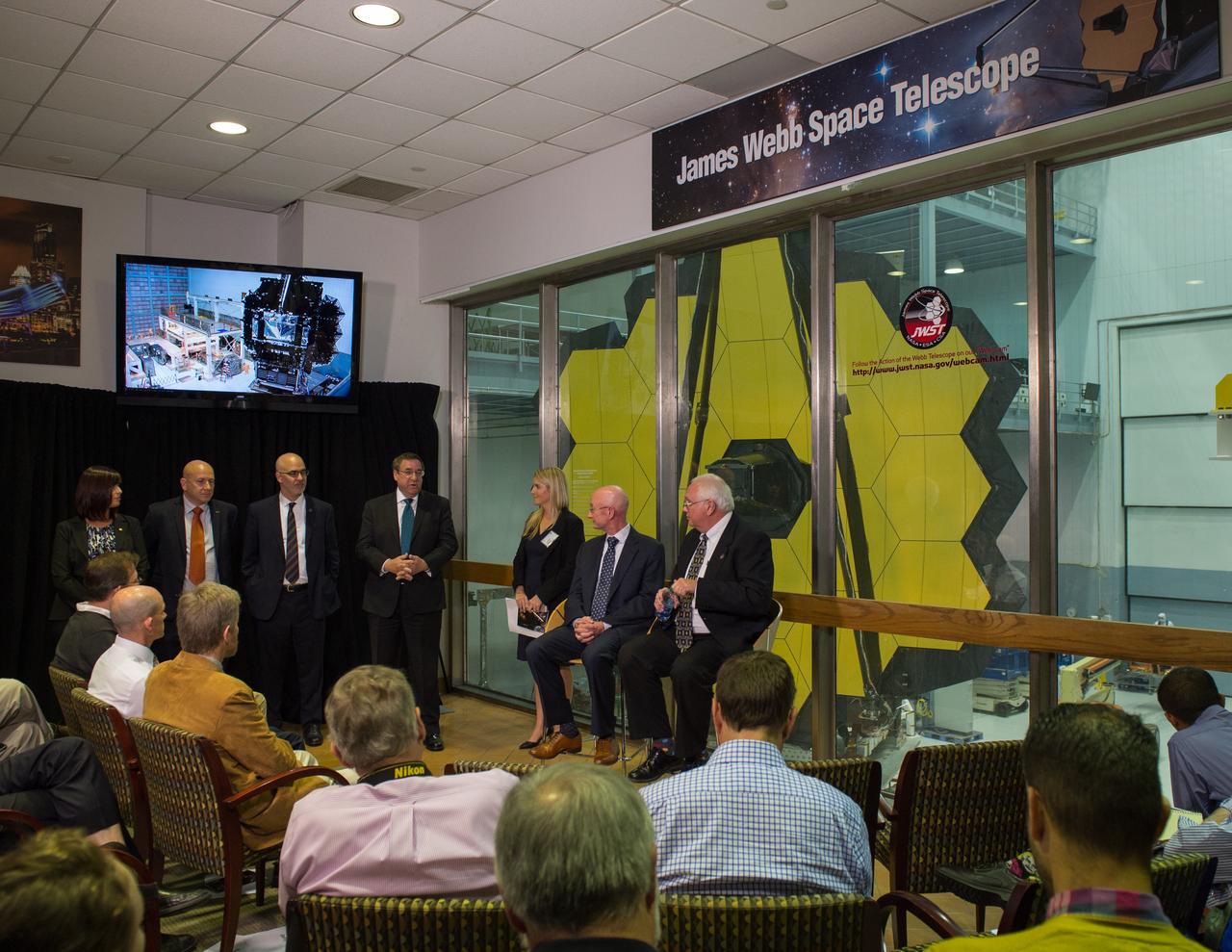
On July 12, 2022, NASA released the first full-colour science images from the James Webb Space Telescope. Within hours, they had been seen by hundreds of millions of people worldwide. Among them was a deep field image — a patch of sky smaller than a grain of sand held at arm's length — crammed with thousands of galaxies, some of them among the oldest ever observed. The response from the scientific community was immediate: Webb had not just met expectations. In several respects, it had shattered them.
A Tale of Two Telescopes
The Hubble Space Telescope launched on April 24, 1990, and despite a famously flawed mirror that required a servicing mission to correct, it became the most productive scientific instrument in history. Over more than three decades, Hubble has contributed to more than 19,000 peer-reviewed scientific papers. It measured the expansion rate of the universe, revealed that nearly every large galaxy harbours a supermassive black hole, and gave humanity images — the Pillars of Creation, the Hubble Deep Field — that became cultural touchstones.
Webb, which launched on Christmas Day 2021, was never intended to replace Hubble. It was designed to go further — both in cosmic distance and across the electromagnetic spectrum. The two telescopes are complementary, not competitive. Yet the comparison is irresistible, because the differences are staggering.
- Mirror diameter: Webb's primary mirror spans 6.5 metres; Hubble's is 2.4 metres — giving Webb roughly seven times the light-collecting area
- Wavelength range: Hubble observes primarily in ultraviolet and visible light; Webb observes in near- and mid-infrared (0.6–28 microns)
- Operating temperature: Webb's instruments must be cooled to –233 °C to detect faint infrared signals; Hubble operates near room temperature
- Orbital location: Hubble orbits Earth at 547 km altitude; Webb sits at the L2 Lagrange point, 1.5 million km from Earth
- Cost: approximately $10 billion for Webb; Hubble's original launch cost was around $1.5 billion
What Makes Webb Different
The core difference between the two telescopes is not simply size — it is wavelength. Hubble sees the universe largely as human eyes do, in visible light. Webb sees in infrared, which means it detects heat as well as light. That distinction has profound consequences for what each telescope can observe.
Seeing in Infrared
The universe is expanding. As galaxies recede, the light they emit is stretched to longer, redder wavelengths by a phenomenon called cosmological redshift. The most distant galaxies — those from the universe's first few hundred million years — have had their light shifted so far toward the red that it is no longer visible light at all. It arrives at Earth as infrared radiation. Hubble cannot see it. Webb can.
Infrared vision also pierces dust clouds that block visible light entirely. Stellar nurseries — the dense, cold clouds of gas where new stars are forming — are opaque to Hubble. Webb sees straight through them, revealing newborn stars in extraordinary detail. Its 2022 image of the Carina Nebula's "Cosmic Cliffs" showed hundreds of previously hidden protostars for the first time.
"Webb doesn't just see farther than Hubble — it sees through the walls that Hubble could never breach, into the nurseries where galaxies and stars are born."
Enjoying this? Get one article like this every week — free. Subscribe below →
The First Years of Science
The results from Webb's first years of operation have genuinely surprised astronomers — and in several cases, challenged existing models of galaxy formation. Perhaps the most striking finding was the discovery of what researchers have informally called "impossibly early galaxies": massive, well-structured galaxies from just 300–500 million years after the Big Bang that appear far more developed than cosmological simulations predicted.
On exoplanet science, Webb has proved equally transformative. It obtained the first direct detection of carbon dioxide in an exoplanet atmosphere (WASP-39 b, in 2022), the first detailed atmospheric spectrum of a rocky planet (TRAPPIST-1 c), and has begun probing the thin, tenuous atmospheres of smaller worlds that Hubble could only study indirectly. The question of whether any Earth-sized planet in the TRAPPIST-1 system possesses a substantial atmosphere is now genuinely answerable with Webb — and the answer, in the next few years of observations, may be among the most consequential in science.
For all of Webb's achievements, Hubble continues to contribute. Operating simultaneously, the two observatories cover complementary wavelength ranges and can observe the same targets from different electromagnetic perspectives. In 2023, coordinated Hubble–Webb observations of a stellar explosion in the galaxy M101 provided the most complete multi-wavelength portrait of a supernova ever assembled. The future of space-based astronomy is not either/or — it is both, working together across the full spectrum of light.