
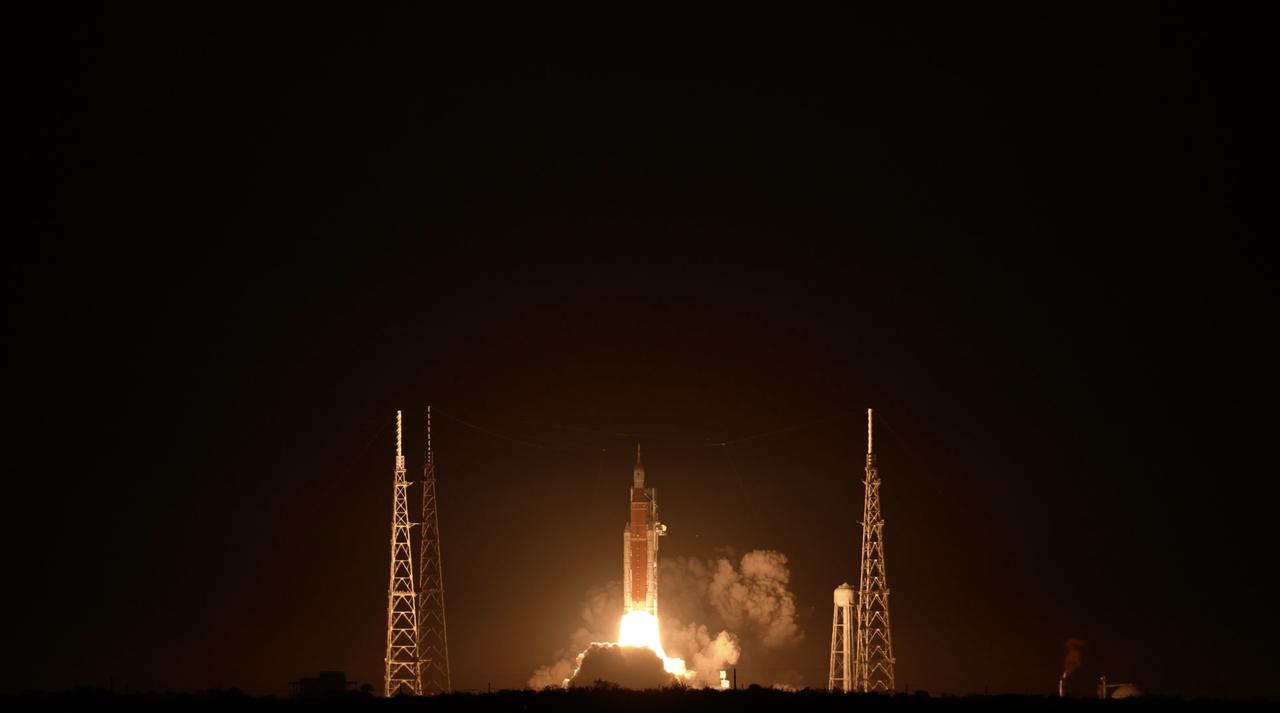
At 1:47 a.m. on November 16, 2022, the Space Launch System rocket ignited its four RS-25 engines and two solid rocket boosters at Kennedy Space Center's Launch Complex 39B, producing 8.8 million pounds of thrust and lifting the Orion spacecraft into the night sky above Florida. It was the most powerful rocket NASA had ever launched — and it carried no crew. Artemis I was a test. Artemis II, III, and beyond are the missions that matter, and they will change the relationship between humanity and its nearest celestial neighbour.
Why Go Back to the Moon?
The Apollo program concluded with Apollo 17 in December 1972. No human being has walked on the Moon in over five decades. The Artemis program, formally announced by NASA in 2017 and accelerated under a series of White House directives, is the systematic effort to return — and this time, to stay.
The goal is not merely to repeat Apollo. The Apollo missions landed near the equator, where communication with Earth was straightforward and lighting conditions were predictable. Artemis is targeting the lunar South Pole, a region that changes everything. Permanently shadowed craters near the poles contain water ice — confirmed by India's Chandrayaan-1 mission in 2009 and subsequently mapped in increasing detail. That ice is not just a scientific curiosity; it is a resource. Split into hydrogen and oxygen, it can produce rocket propellant. Combined with a pressurised habitat, it could support sustained human presence.
The South Pole also sits at the edge of regions that receive near-continuous sunlight, allowing solar power systems to operate almost indefinitely. For a permanent outpost — which NASA and its international partners explicitly envision — this combination of water, power, and relative accessibility from Earth makes the South Pole the only rational destination.
"The Moon is not the destination — it is the practice ground. Everything we learn about living and working in deep space at the Moon, we take with us to Mars."
Enjoying this? Get one article like this every week — free. Subscribe below →
The Artemis Architecture
Artemis is more than a rocket and a capsule. It is an integrated architecture involving multiple agencies, commercial partners, and a new class of space infrastructure. The key components are the Space Launch System (SLS), the Orion crew capsule built by Lockheed Martin, and SpaceX's Human Landing System — a modified version of the Starship vehicle — which will carry astronauts from lunar orbit down to the surface and back.
- Space Launch System (SLS): the most powerful rocket ever flown, capable of launching 95 tonnes to low Earth orbit in its Block 1 configuration
- Orion capsule: designed to carry four astronauts for up to 21 days, with a European Service Module providing propulsion and life support
- SpaceX Human Landing System: a lunar Starship variant, selected by NASA in 2021 following a competitive tender
- Artemis Accords: bilateral agreements signed by more than 40 nations committing to responsible exploration norms in cislunar space
The Gateway: A Station Between Worlds
In lunar orbit, NASA and its international partners — including ESA, JAXA, and the Canadian Space Agency — are building Gateway, a small space station that will serve as a staging point for lunar surface missions. Unlike the International Space Station, Gateway will not be permanently crewed. It will be visited for campaigns of up to 90 days, maintained between crewed missions by autonomous systems, and gradually expanded over time. Its near-rectilinear halo orbit keeps it within relatively easy reach of both Earth and a wide range of lunar surface sites, and it will serve as the communications and logistics hub for sustained South Pole operations.
Artemis I and the Road Ahead
Artemis I's uncrewed Orion capsule flew a 25-day mission in November–December 2022, entering a distant retrograde orbit around the Moon before returning to Earth. The capsule splashed down on December 11, 2022, with its heat shield — designed to withstand re-entry from lunar return speeds of 40,000 km/h — performing as expected.
Artemis II is scheduled to carry four astronauts — Reid Wiseman, Victor Glover, Christina Koch, and Canadian astronaut Jeremy Hansen — on a crewed lunar flyby, swinging around the Moon without landing, as a repeat of Apollo 8's role in proving the full crew system. The crewed lunar landing itself, Artemis III, targets the Moon's South Pole and will mark the first human footsteps on the lunar surface since Gene Cernan's final steps in December 1972.
What makes Artemis categorically different from Apollo is not the technology — remarkable as it is. It is the intent. Apollo was a sprint, driven by geopolitical urgency and concluded as soon as the flag had been planted. Artemis is designed as an enduring presence: a scientific outpost, a resource extraction proving ground, and the first chapter of a much longer story that ends — if the plans hold — with boots on the Martian surface sometime in the 2040s.